

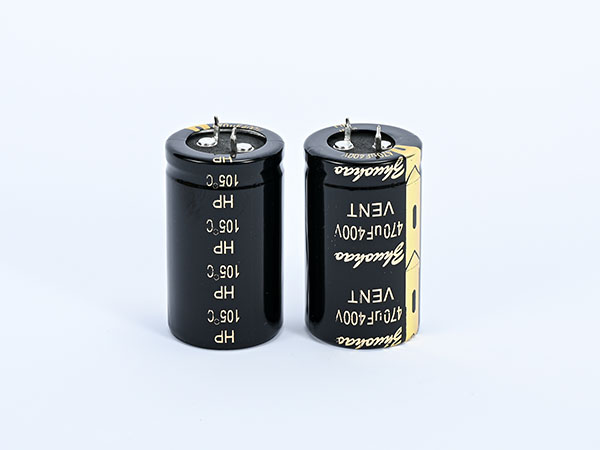
Against the backdrop of continuously increasing reliability requirements for electronic devices worldwide, the lifespan of aluminum electrolytic capacitors has become a key factor affecting the overall lifecycle of equipment. According to the Electronic Component Reliability Research Council (ERC), approximately 30% of power supply failures are due to premature capacitor failure, and extending capacitor lifespan can increase the mean time between failures (MTBF) by more than 40%. Optimizing the entire chain, from material selection to thermal design, is becoming a core strategy for European and American electronics manufacturers to reduce maintenance costs and enhance product competitiveness.
I. Material Selection: Performance Breakthroughs from Electrolyte to Electrode
The stability of the electrolyte directly determines the capacitor’s lifespan. Traditional liquid electrolytes are prone to evaporation at high temperatures, leading to a shortened capacitor lifespan. New high-temperature resistant electrolytes, by introducing organic sulfonate ester additives, can increase the upper limit of the operating temperature from 105℃ to 125℃, and extend the rated lifespan at 85℃ from 2000 hours to over 5000 hours. European capacitor manufacturers have also introduced hybrid electrolyte solutions, combining the advantages of liquid and solid electrolytes. These solutions retain low ESR characteristics while extending lifespan by three times, and are widely used in industrial frequency converters.
Improvements in electrode materials are equally crucial. Using high-purity (over 99.99%) aluminum foil and forming a porous structure through electrochemical etching can increase the electrode surface area by 100-200 times, not only increasing capacitance but also reducing localized heating caused by current concentration. A US manufacturer’s nanoscale oxide film technology controls oxide film thickness deviation within ±2%, significantly reducing leakage current. At a rated voltage of 100V, leakage current can be controlled below 5μA, further extending capacitor lifespan.
II. Process Optimization: Refined Control of Packaging and Aging Testing
The sealing performance of the packaging process is key to preventing electrolyte leakage. Using laser welding sealing technology instead of traditional rubber stopper seals can improve packaging sealing performance by over 90%, effectively preventing electrolyte expansion and leakage due to temperature changes. Some European manufacturers have also incorporated pressure sensors into the capacitor’s packaging. When the internal pressure exceeds a threshold, a protection mechanism is triggered promptly to prevent the capacitor from bursting, while also providing data support for lifespan prediction.
Strict control over the aging test process is also indispensable. Accelerated aging testing at 125°C and 1.2 times the rated voltage for 1000 hours can screen out capacitors that fail early, ensuring the lifespan stability of products leaving the factory. The US electronic testing standard (JEDEC JESD22-A108) explicitly requires aluminum electrolytic capacitors to pass a high-temperature bias test to verify their long-term reliability; this standard has become an important basis for procurement in the European and American markets.
III. Heat Dissipation Design: Synergistic Cooling of Circuit and Structure
For every 10°C reduction in capacitor operating temperature, lifespan can be doubled; therefore, heat dissipation design is crucial. In circuit layout, keeping capacitors away from power devices (such as IGBTs and rectifier bridges) reduces the impact of heat radiation; a spacing of at least 5mm is typically required. Employing a copper-plated thermal design on the PCB board, the increased contact area between the capacitor leads and the PCB board allows for rapid heat transfer to the heatsink, reducing the capacitor’s operating temperature by 15-20°C.
Structurally, incorporating heat dissipation channels around the capacitor or using a metal casing connected to the overall cooling system can also effectively lower the temperature. A German automotive electronics manufacturer designed an independent aluminum heatsink bracket for the capacitor in its vehicle power module, combined with forced air cooling by a fan, keeping the capacitor’s operating temperature below 65°C and extending its lifespan to 8000 hours, meeting the 10-year/200,000 km lifespan requirement for new energy vehicles.
This end-to-end optimization, from materials to processes to heat dissipation design, provides a feasible path to extend the lifespan of aluminum electrolytic capacitors. As the lifespan requirements for equipment in new energy, industrial control, and other fields continue to increase, these optimization solutions will become more widespread, driving the global electronics industry towards higher reliability and longer lifespan. For electronics manufacturers, choosing capacitor suppliers with end-to-end optimization capabilities will be key to enhancing product market competitiveness.

Leave a Reply