

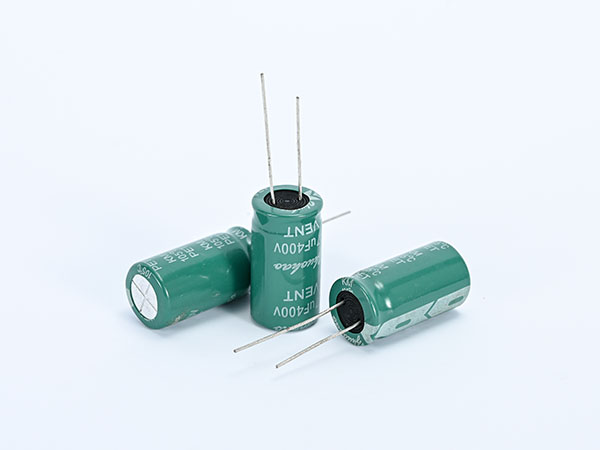
In today’s global electronics industry, which is rapidly upgrading towards higher frequencies and smaller sizes, aluminum electrolytic capacitors, as the “energy managers” of power circuits, directly determine the reliability, maintenance costs, and market competitiveness of equipment through precise selection.
An international consensus in the field of electronic engineering is that the three-dimensional synergistic matching of equivalent series resistance (ESR), lifespan, and temperature coefficient is the core principle for overcoming selection dilemmas and mitigating engineering risks. This concept is particularly prominent in the industrial practices of leading electronics manufacturing countries such as Europe, the United States, Japan, and South Korea.
ESR, as a core indicator for measuring capacitor power loss, exhibits a non-linear relationship with temperature, making it a primary consideration in selection. At low temperatures, the decreased ionic activity of the electrolyte leads to a sharp increase in ESR—data shows that in industrial low-temperature scenarios at -40℃, ESR values can be 5-8 times higher than at room temperature (25℃), easily causing a decline in circuit ripple suppression capabilities. Furthermore, when the operating temperature exceeds 105℃, accelerated electrolyte evaporation causes an imbalance in the capacitor’s internal impedance, further exacerbating the ESR rebound.
Taking a capacitor with a rated lifespan of 2000 hours at 85℃ as an example, if the actual operating temperature is controlled at 65℃, the lifespan can be extended to 8000 hours, significantly reducing the cost of replacing the equipment later.
In high-frequency applications such as server power supplies and on-board chargers (OBCs) for new energy vehicles, low ESR (<100mΩ) models are the preferred choice. At the same time, it is necessary to ensure that the rated voltage has a margin of more than 15% to prevent thermal accumulation failure caused by ripple current. According to statistics from the Electronic Components Reliability Research Council (ERC), by optimizing the matching relationship between ESR, lifespan, and temperature coefficient, the overall failure rate of electronic equipment can be reduced by more than 40%.
Currently, this selection rule has become a key standard for European and American new energy companies and industrial control equipment manufacturers to optimize their supply chains, especially in high-temperature and high-load scenarios such as photovoltaic inverters and industrial frequency converters, where it is the “technical bottom line” for ensuring stable equipment operation. With the surge in global demand for green energy equipment and intelligent industrial equipment, mastering this core matching rule will help companies gain an advantage in international market competition.

Leave a Reply